Siri & Glimstad Sues HHS for Eric Freed’s Emails in NIHGate Case
Approximately 80-110 million people have received MRNA genetic therapy injections since my FOIA was filed. After filing their own FOIA which was rejected, Aaron Siri’s law firm is now suing.
By Broken Truth
What is NIHGate?
NIHGate is the effort to block access to emails by the National Institutes of Health and National Cancer Institute of evidence linking the SARS-CoV-2 spike protein — from infection or mRNA vaccines — to damaged DNA repair, suppressed tumor-suppressor genes like p53, and higher cancer risk.
A central piece of that story is a 2021 paper by Hui Jiang and Ya-Fang Mei. Published in the journal Viruses, it showed the spike protein enters the cell nucleus and interferes with DNA repair. The paper was downloaded nearly half a million times before it was pulled.
Eric O. Freed, a senior NCI scientist who also served as an editor of Viruses, co-authored an “Expression of Concern” in December 2021. The paper was fully retracted in May 2022.
Broken Truth has reported that this was not ordinary scientific correction. Emails and records show NIH and NCI staff actively managing and concealing evidence that the spike protein was linked to rising cancer rates. Freed’s dual role as both government researcher and journal editor put him at the center of the decision.
Investigative journalist Rebekah Barnett has added critical detail. In her June 2024 exclusive report, co-author Ya-Fang Mei said Stockholm University forced the retraction without her consent, calling it “a clear violation of academic ethics” and “illegal.” Mei never signed the retraction notice and strongly disputed the stated reasons.
Emails obtained by Barnett show external pressure — including repeated demands that the paper be withdrawn quickly because it was being used as “misinformation.” One activist emailed the journal insisting they could not wait for a proper scientific investigation. Freed himself stated that retraction does not require evidence of scientific misconduct. NIH later refused FOIA requests for Freed’s emails on the same Exemption 4 grounds now being litigated.
The Lawsuit
Informed Consent Action Network (ICAN), represented by Siri & Glimstad, sued the National Cancer Institute and HHS in January 2024 after the agencies refused to release records.
The FOIA request asked for two things:
All emails between Eric Freed and Oliver Schildgen from August 20, 2021 through May 31, 2022
All emails sent or received by Freed that contained the word “Jiang” plus any of these terms: paper, expression, concern, or retract*
These are the exact communications around the Expression of Concern and the retraction of the Jiang/Mei paper — the same paper at the heart of NIHGate and the focus of Barnett’s reporting.
The agency found 490 pages of responsive records. It withheld every single page under FOIA Exemption 4, claiming the emails reflected the journal’s confidential commercial editorial process.
What the Court Ruled (March 25, 2026)
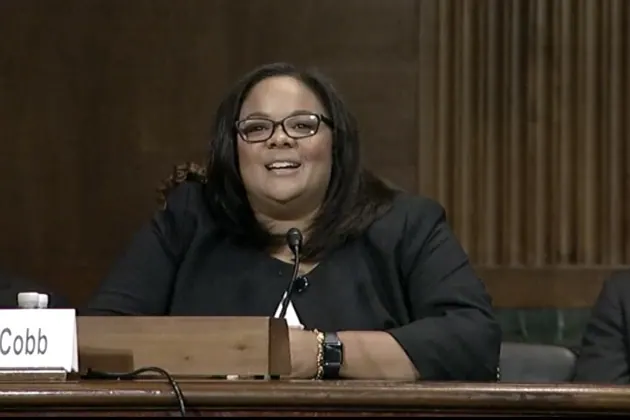
Judge Jia M. Cobb issued a split decision:
Search was good enough
The Court ruled that searching Freed’s email account and having him confirm the results was a reasonable search. Summary judgment was granted to the government on this point.
Exemption 4 is not yet justified
The Court agreed the records are “commercial” and were “obtained from a person.” But it said the government failed to prove the records are truly confidential. The agency’s declaration did not adequately explain how it knew the journal’s privacy practices.
Both sides’ summary judgment motions on the withholdings were denied without prejudice. The government must submit more evidence. The Court left the issues of foreseeable harm and segregability for later.
Where the Case Stands Now (August 2026)
The fight is now focused only on whether the government can prove the emails are confidential under Exemption 4.
After the March ruling, the parties agreed the government would produce new declarations.
In June, the government sent a draft declaration from NIH Acting FOIA Officer Karen Lampe.
ICAN reviewed it, flagged problems, and the two sides have been exchanging responses.
As of mid-August, ICAN is still reviewing the government’s latest replies. Another status report is due in September.
No records have been released. The 490 pages remain completely withheld.
Why This Matters
These emails sit at the exact intersection of government science, journal gatekeeping, and the decision to retract research that showed the spike protein damages DNA repair pathways.
Broken Truth and Rebekah Barnett have both documented the pressure, the dual roles, and the refusal to release the underlying communications. Full disclosure is the only way to know whether the Expression of Concern and retraction were pure science — or something else.
Siri & Glimstad and ICAN are still pushing. Broken Truth will keep watching the docket and reporting every new development.
Case files can be obtained on Pacer, and downloaded here.
⤓ 016 Plaintiff's Cross Motion For Summary Judgment (2024 06 21)
⤓ 015 Motion For Summary Judgment (2024 05 24)
⤓ 017 Memorandum In Opposition To Defendants' Motion For Summary Judgment (2024 06 21)
⤓ 018 1 Defendants' Response To Plaintiff's Statement Of Undisputed Material Facts
⤓ 020 Plaintiff's Reply Brief In Support Of Its Motion For Summary Judgment (2024 08 08)

Originally published on BrokenTruth.TV.